YouTube is not only for artists, influencers, gamers and entertainment brands. It is one of the most powerful search based discovery platforms in the world, and many traditional businesses are still not using it seriously. A closely related aspect is covered in Your digital marketing strategy can’t be without YouTube.
If your company sells industrial components, professional services, machinery, software, consulting, construction materials, medical devices, local services, training, logistics or anything that does not look “spectacular” at first sight, you may have never considered YouTube as a real business channel.
YouTube is often described as the second largest search engine in the world. Even if you prefer to call it a video platform, the practical reality is the same: people use YouTube to search, compare, learn, evaluate products, solve problems and decide who to trust. YouTube is also consistently ranked among the most visited websites globally, usually just behind Google itself, according to traffic rankings based on Similarweb and Semrush data.
In other words, your potential customers may already be searching for information that your business could explain better than anyone else. The problem is that you are probably not there.
YouTube Is Not Just Entertainment Anymore
Many business owners still think of YouTube as a place for music videos, comedy, influencers, podcasts, gaming, tutorials and viral entertainment.
That is only part of the picture.
For millions of users, YouTube is a practical search engine. People go there when they want to understand how something works, how to choose between two options, how to avoid mistakes, how to install a product, how to maintain a machine, how to compare services, how to solve a technical problem or how to decide whether a company looks credible.
That means YouTube is not only useful when your product is visually exciting. It is useful when your product or service requires explanation.
And this is exactly where many “normal” businesses have an advantage.
If you sell something complex, technical, expensive, professional or difficult to understand, video can reduce friction. A good video can explain in three minutes what a written product page may struggle to explain in twenty paragraphs.
The Businesses That Need YouTube the Most Often Ignore It
The irony is that many of the businesses that could benefit the most from YouTube are the ones that ignore it completely.
A fashion brand understands the value of visuals. A musician understands the value of video. A fitness coach understands the value of showing movement. A restaurant understands the value of atmosphere.
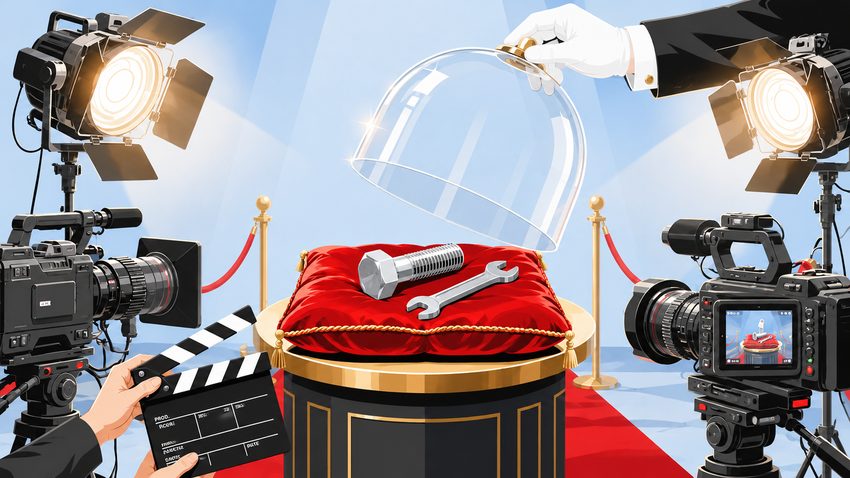
But what about a company that sells screws, valves, pumps, B2B software, packaging systems, accounting services, dental equipment, legal consulting, industrial filters or agricultural tools?
These businesses often assume that YouTube is not for them because their product is not glamorous.
But customers do not only search for glamorous things. They search for useful answers.
A buyer may search for:
- how to choose the right industrial pump
- common mistakes when installing a valve
- how to compare two types of packaging machines
- what to check before buying a used forklift
- how to reduce maintenance costs in a production line
- how a specific software workflow works
- why a certain component fails after a few months
- how to prepare for a tax, legal or technical procedure
These are not entertainment searches. They are business searches. And business searches can turn into business opportunities.
Your Product Does Not Need to Be Spectacular
One of the biggest misunderstandings about video marketing is the idea that the product itself must be visually spectacular.
It does not.
A boring product can solve an expensive problem. A small component can prevent a serious failure. A technical service can save time, reduce risk, improve compliance or help a customer make a better decision.
The video is not there to make the product look like a movie trailer. The video is there to make the value visible.
For a traditional business, good YouTube content does not need to look like influencer content. In many cases, it should not. It should be clear, useful, credible and direct.
For example, a business can create videos such as:
- how to choose the right product for a specific use case
- three mistakes customers make before buying
- how the product works internally
- comparison between two solutions
- installation or maintenance guide
- before and after case study
- customer FAQ
- behind the scenes in production
- common myths in the industry
- what buyers should check before requesting a quote
This kind of content may not go viral. It does not need to.
If the right buyer watches it at the right moment, it can be more valuable than thousands of random views.
People Search Before They Buy
Before contacting a supplier, many people search. Before requesting a quote, they compare. Before trusting a company, they look for signals.
This is true for consumers, but it is also true for B2B buyers.
A buyer may not be ready to contact you today. But if your video answers a question they are already searching for, your company enters their mind before the sales conversation begins.
This is the hidden value of YouTube for business.
A YouTube video can work as:
- a search result
- a trust signal
- a technical explanation
- a sales support asset
- a pre qualification tool
- a way to reduce repetitive questions
- a long term visibility asset
Unlike a temporary social media post, a useful YouTube video can keep being discovered over time. It can rank for search queries, appear in suggested videos, be embedded on your website, shared in emails, used by sales teams and sent to prospects who need a clear explanation.
The Real Problem: Publishing Is Not Distribution
Here is where many businesses fail.
They decide to “try YouTube”. They publish one or two videos. The videos get 23 views, 47 views or 112 views. Then they conclude that YouTube does not work for their industry.
But that is often the wrong conclusion.
The real problem is not that YouTube does not work. The problem is that nobody saw the video.
Publishing a video is not the same as distributing it. Uploading a video and waiting for the algorithm to reward it is not a strategy, especially for a new or inactive channel.
This is even more true for businesses that are new to video. If your channel has little history, few subscribers and no regular audience, YouTube has very little data to understand who should see your content.
That does not mean the video is useless. It means it needs an initial push.
Why Business Videos Need Promotion
Many companies are willing to invest in video production but forget to invest in video distribution.
This is a common mistake.
A video can be well filmed, well edited and strategically useful, but still fail because it never reaches the right audience. In that case, the business owner may blame the video format, the platform or the market, when the real issue was lack of promotion.
For YouTube, promotion can mean different things:
- Google Ads campaigns for real YouTube ad traffic
- targeted visibility campaigns
- social proof views to make a video look active
- watch time campaigns when the goal is stronger engagement signals
- SEO optimization for titles, descriptions and topics
- embedding videos inside blog posts, landing pages and email sequences
The right strategy depends on the goal.
If the goal is brand trust, you may need a clean explanatory video and targeted ad traffic. If the goal is social proof, you may need visible activity on the public counter. If the goal is long term discovery, you need search oriented topics, retention and optimization. If the goal is lead generation, you need a video that answers a specific business problem and leads the viewer to the next step.
Google Ads Can Help, But It Is Not Magic
One of the cleanest ways to promote a YouTube video is through Google Ads. This can bring real traffic through Google’s advertising system and can be especially useful when you want to reach specific countries, interests or audiences.
However, Google Ads is not magic.
A campaign can be limited by budget, bid strategy, targeting, audience size, video quality, content category, thumbnail, title or advertiser friendliness. In some cases, a campaign can be active and approved but still spend slowly because Google Ads does not find enough suitable opportunities to scale it.
This is why business owners should not think only in terms of “upload video, run ads, get results”. The video itself must be suitable for promotion. The campaign must be structured properly. The budget must be realistic. The audience must be large enough. The message must be clear.
In short, YouTube visibility requires both content and distribution.
What Kind of Business Videos Should You Create First?
If your business is starting from zero, do not begin with a vague corporate video.
Most corporate videos are too generic. They talk about mission, values, history and passion, but they often fail to answer the customer’s real question.
A better starting point is to create videos around concrete search intent.
For example:
- What problem does your product solve?
- What mistake should buyers avoid?
- What question do prospects ask before buying?
- What comparison do customers often make?
- What technical detail creates confusion?
- What process can you show more clearly than your competitors?
- What objection can you answer before the sales call?
If your video answers one of these questions clearly, it has a reason to exist.
That is much more powerful than publishing a generic “about us” video that nobody searches for.
YouTube Can Support LinkedIn, Your Website and Sales
YouTube should not be isolated from the rest of your marketing.
A good business video can be reused in different ways. You can publish it on YouTube, embed it in a blog post, share it on LinkedIn, send it to leads, use it in a newsletter, include it on a landing page, or send it after a sales conversation.
This is especially important for LinkedIn.
LinkedIn can generate attention, comments and professional visibility. YouTube can host the deeper explanation. Your website can convert the visitor. These channels should work together.
For example, a short LinkedIn post can introduce a problem. The YouTube video can explain the solution. The blog post can add details and references. The service page can convert the interested reader.
This is how a video becomes part of a funnel instead of being just another piece of content.
Your Competitors Are Probably Ignoring This Too
The good news is that many traditional businesses are still late.
In many industries, competitors are not creating useful YouTube content. Or they are publishing low effort videos with no strategy, no search intent, no promotion and no consistency.
This creates an opportunity.
You do not need to become a famous creator. You do not need to dance, entertain or chase trends. You need to become useful, visible and credible in your niche.
If your competitors are ignoring YouTube, you can start building a video presence before the market becomes crowded.
And if they are already using YouTube badly, you can do it better.
Build the Channel Before You Need It
A YouTube channel is not built in one day.
If you wait until you urgently need leads, visibility or credibility, you are already late. The best time to build a YouTube presence is before you need immediate results.
Start with a small number of useful videos. Focus on real questions. Promote the best ones. Watch how people respond. Improve thumbnails, titles and openings. Learn which topics attract attention. Then build from there.
YouTube is not only a place to publish videos. It is a long term visibility asset.
For many businesses, especially those in technical or B2B sectors, the opportunity is still underestimated.
Conclusion: Your Business Does Not Need to Be Famous. It Needs to Be Findable.
The biggest mistake is thinking that YouTube is only for people who want fame.
For a business, YouTube is not mainly about fame. It is about being found, understood and trusted.
Your customers may already be searching for answers. They may already be comparing solutions. They may already be trying to understand the problem that your company solves.
If your business is not present there, someone else will answer those questions instead.
YouTube is often described as the second largest search engine in the world, but many businesses still treat it as a place for entertainment only.
That is the opportunity.
If your company is ready to use YouTube as a real visibility channel, publishing videos is only the first step. A video needs distribution, testing and promotion before it can become a useful business asset.
Ready to give your business channel a stronger start?
Our YouTube Channel Package promotes your channel as a whole by distributing views, likes, subscribers and comments across a selected group of relevant videos. Simply provide your channel link and our team will manage the video selection and delivery.
References
- YouTube is consistently ranked among the most visited websites worldwide, usually second after Google, according to lists based on Similarweb and Semrush traffic rankings.
- Google Ads and YouTube Ads allow businesses to promote videos through Google’s advertising system, using formats such as skippable in stream ads, in feed video ads and other YouTube advertising placements.
- Video advertising performance can vary depending on targeting, budget, bid strategy, viewer geography, content category, creative quality and audience behavior.
Related posts:
How to collaborate with other youtubers: Tips and Tricks for Successful Partnerships
What Holds Rap Videos Back on YouTube? A Study of 59 Music Videos
10 Youtube features that you didn't know about!
Youtube will remove the Dislikes below the videos - do you know why?
YouTube Select: The Ultimate Advertising Program for Reaching Your Target Audience

Consultant in communication and marketing, I support professionals and businesses in enhancing their online presence through tailored strategies.
With extensive experience in digital marketing, I focus on designing targeted social media campaigns and managing video promotion projects.
I conduct ongoing research on social networks, especially YouTube, analyzing its algorithms, user behavior, and content dynamics to inform effective practices.